I have felt tired this term and academic year, a tiredness that is beyond the normal end of term tired. This has led to a useful exploration of the psychology of rest and some challenging reflections.
As a school teacher for over 25 years, rest is something I have got wrong on many occasions. Too often I have pushed through exhaustion and not known how to stop. The problem is that the work is never really done and drawing a line at the end of a day has often been a challenge. For teachers, there is always a bit more planning and prep you can do and there is this constant feeling that you are only ever as good as the last class you taught.
Each week, we promise ourselves that next week will be easier, a bit quieter and we will have less to do, but this promised land never seems to come. And here we are in the middle of the busiest term; the business end of the school year and any sort of rest or peace seems further away than ever.
Teacher rest is notoriously difficult to navigate during term times but perhaps an important reason why we should.
Getting some decent rest is hard work. Whilst I would admit that I am still a work in progress, this understanding has taken me several decades to work out what it might look like. Self-care and compassion are essentials tools for those working at the chalkface.
As teachers, we are pros at pushing through exhaustion. We push through paperwork, pastoral care, planning, and performance reviews. We carry the emotional and intellectual load of 30+ young people at a time, five days a week—and then some. But true rest isn’t just about sleeping more. It’s about restoring every part of ourselves and not feeling guilty for prioritising self over others. This is a difficult emotional landscape for those of us in the caring professions, but an important one.
The emerging discipline of Rest Psychology focuses on understanding the role of rest in mental and emotional wellbeing. It examines how different types of rest can impact our psychological health. This field recognises that rest is not just a physical necessity but also crucial for emotional and mental well-being and provides invaluable insights into how we can effectively recharge and maintain mental clarity and emotional stability.
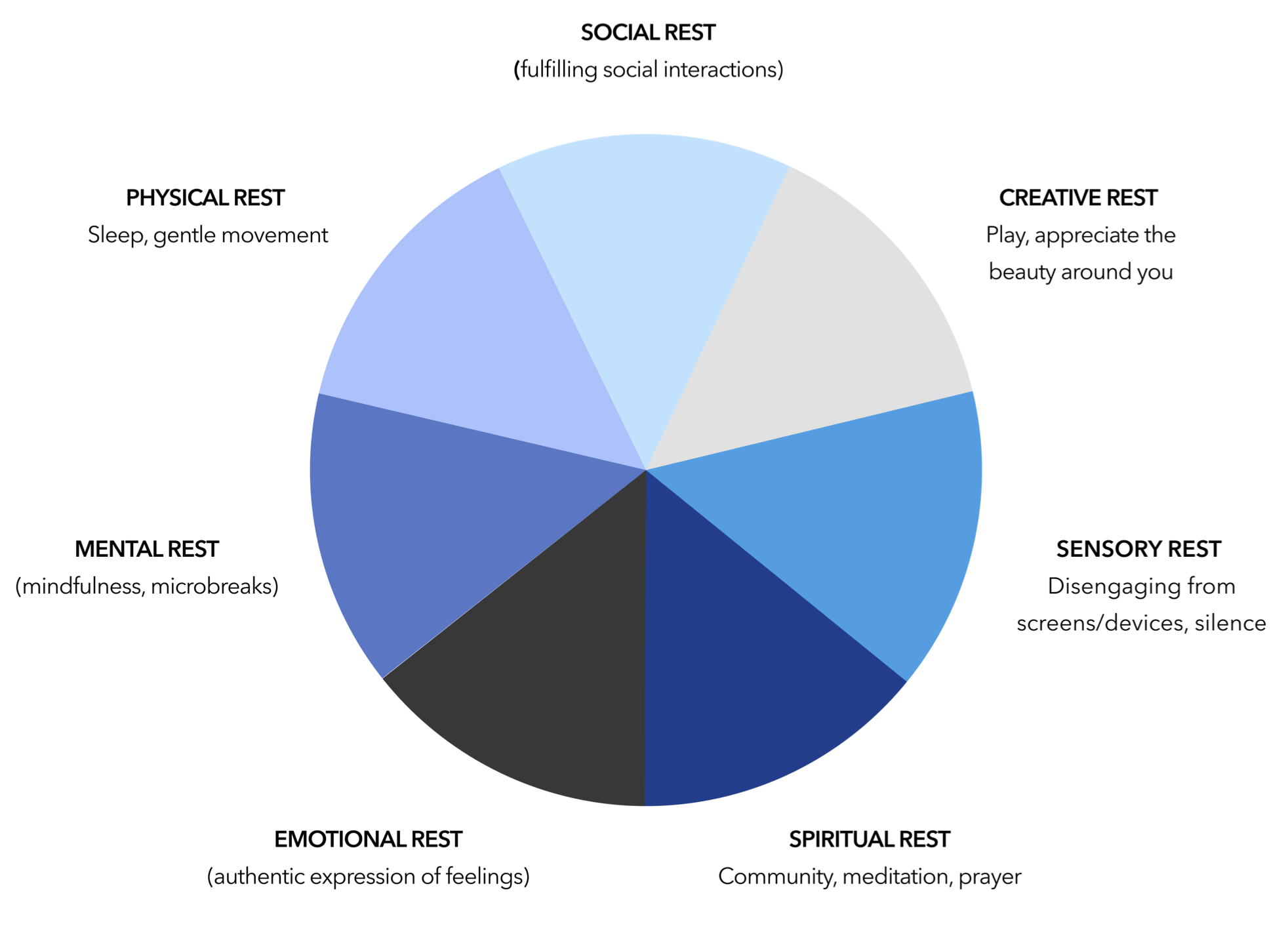
In her book Sacred Rest, Dr. Saundra Dalton-Smith identifies seven types of rest—each vital, especially for educators navigating burnout, overwork, and overwhelm. This is an important part of all teacher training; learning how to survive and thrive in the profession for a long time. Dalton-Smith also offers some practical tips on how to achieve these types of rest. Staying busy is easy. Staying well rested-now there’s a challenge.
1. Physical Rest
This is the kind we often chase: sleep, naps, lying down. But it also includes active rest like stretching, yoga, or walking. If you’re standing for hours or feel physically depleted, physical rest should be your priority. It helps release muscle tension and replenish energy.
Try this: Bookend your school day with a slow, intentional walk. No podcast, no multitasking—just movement.
2. Mental Rest
My brain slows down with exhaustion and I find myself staring at the screen and reading the same sentence over and over again. I used to think there was something faulty about my cognitive processing but perhaps my brain is just full. Teachers live in a world of decisions and deadlines—mental rest gives the mind a break.
Try this: Keep a notepad next to your bed or desk to brain-dump stray thoughts. Build in a pause between lessons—just for you.
3. Emotional Rest
Teaching is an emotional landscape which we ignore at our peril. We show up with a brave face even when we’re running on empty. Emotional rest means having space to connect with the emotions without judgement or expectation.
Try this: Speak honestly to a trusted friend or colleague. Or simply journal what you really feel after a hard day. No filter.
4. Sensory Rest
I am a hopeless addict to my digital devices, even though I know it is not good for me. Whiteboard glare. Screeching chairs. Constant noise. Notifications. Our classrooms and lives are a sensory overload. Sensory rest involves removing this stimulation. This might be as simple as turning off our devices, embracing quietness, dimming lights, or for me enjoying nature. Sensory rest can help in reducing the strain on your senses and can lead to a calmer, more focused state of mind.
Try this: End your day with 10 minutes of total quiet—no screens, lights dimmed. Or take a tech-free lunch break, even just once a week.
5. Creative Rest
Teachers give out creative energy all day. You’re problem-solving, adapting lessons, and spinning engagement out of thin air. Creative rest is about receiving inspiration rather than producing it. Engaging with the beauty in the world, art, nature, or music, can allow you to become more inspired. This type of rest can spark new ideas, enhance problem-solving skills, and bring joy.
We are not hardwired for happiness, our fight or flight systems have us constantly scanning our environment for risks. Joy and happiness are something that needs to be worked at, looked out for and nurtured.
Try this: Visit a gallery, walk through nature, or listen to music without doing anything else. Let beauty fill the creative void.
6. Social Rest
I often think that I have spent enough time with people during the school day and look forward to relative calm and isolation when I get home. The act of going out and speaking to others can feel burdensome, but often when I do make the effort it can have recuperative effects. We often think rest means solitude—but it might mean the opposite. Social rest isn’t isolation; it’s connection with the right people. Sometimes we need time alone. Other times, we need to be around those who uplift us.
Try this: Make time for people who energise you. Skip the draining catch-up. Say no more often, yes more meaningfully.
7. Spiritual Rest
You’re more than your job. Spiritual rest helps us reconnect with purpose and meaning—beyond marking and meetings. Any activity that helps us connect to something greater than ourselves, I like being in nature and get a lot out of community involvement. Spiritual rest can provide a deep sense of calm and a renewed perspective on life.
Try this: Spend time in nature, meditate, pray, or volunteer. Anything that reminds you of your “why”—the reason you started teaching in the first place.
Making Rest Work in a Teacher’s World
As teachers, we often remark that we feel tired but we do not have time to rest, I can hear myself saying it in the staffroom. But, perhaps this is more about recognising what type of tired you are – noticing which form of tiredness fits your symptoms and thinking about small steps that you can take.
We need to schedule rest, like we schedule our lessons. We can work clever and combine different types of rest, creating rest rituals and good habits. Ultimately, to have a long and healthy career in teaching, we need to get better at boundaries.
Rest is a radical act of resistance in a system that often glorifies burnout and has little control over teacher workload.
What I have learnt is that rest isn’t weakness. It’s wisdom. It is the essential tool that lets us show up again—and again—with our hearts intact.
Dear teachers: don’t just survive. Rest to renew. You deserve that. Your students do too.
Sources:

